
Business challenge
Webshops become difficult to grow when catalogue data, customers, variants, orders, permissions and integrations are not designed as one operational workflow.
A commerce direction focused on turning product data, customer workflows and backend logic into a scalable ecommerce foundation.
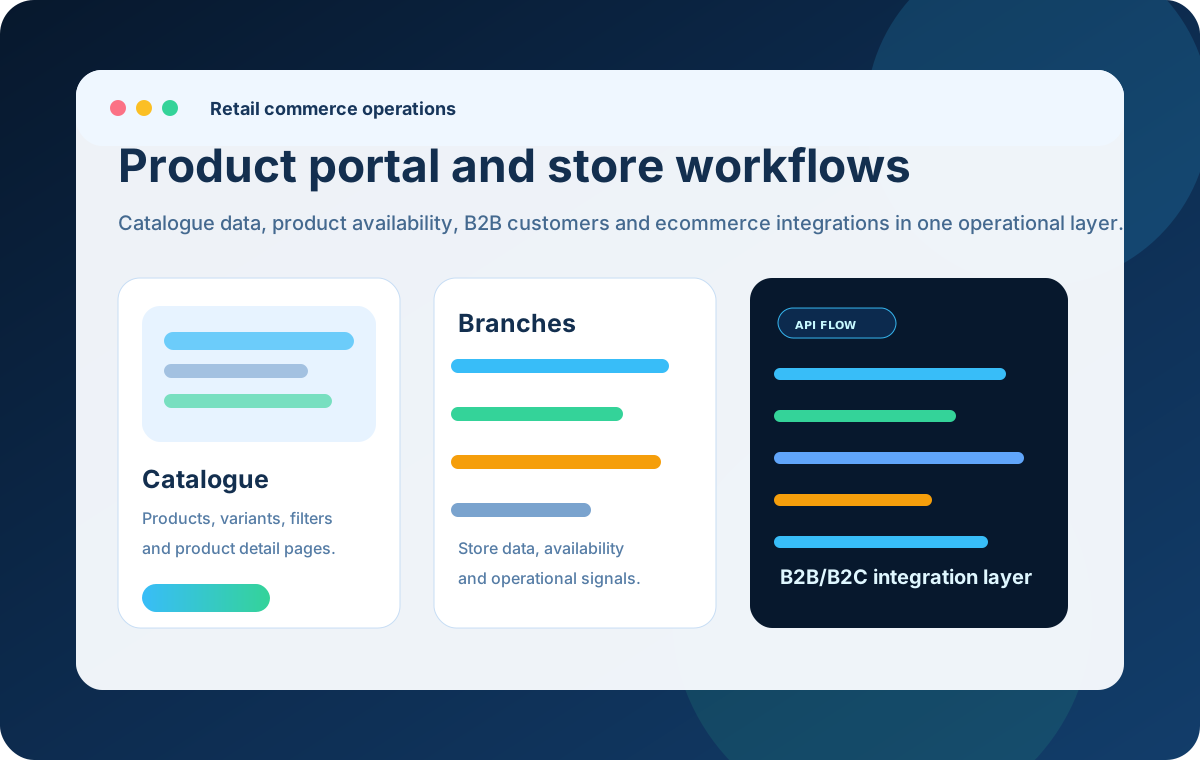
Webshops become difficult to grow when catalogue data, customers, variants, orders, permissions and integrations are not designed as one operational workflow.
These ranges show the measurable direction this type of system is designed for: less manual work, faster operations, clearer data and stronger lead handling.
A structured catalogue, roles and authorization model reduces repeated manual work around product and customer operations.
Commerce is easier to scale when product data, users and order logic are designed as one process.
The webshop direction can support customer-specific logic, documents, API flows and future B2B modules.
Not only the stack, but the workflow, data ownership, reliability and next commercial step.
Short project notes written without client names. They show the practical decisions that make the system easier to maintain, sell and scale.
A webshop grows better when catalogue, customers, authorization, orders and documents are designed as one operating model.
For business buyers, repeat orders, documents, price logic, roles and account history often matter more than a decorative storefront.
Product data should be reusable across ecommerce, B2B, DPPC, public pages and partner integrations instead of living in one channel.
The same approach is useful for Laravel platforms, B2B systems, DPPC workflows, ecommerce, CRM and API integrations: define the data, build the workflow, measure the result and improve it after launch.
Customer-specific prices, permissions, product variants, documents, order workflows and integrations with business systems.
Yes. DPPC can provide structured product data, documents and public product pages that ecommerce and B2B systems can reuse.
Send a short context. We will map the first sensible step for the system, integration or landing page that should support business growth.
No noise. Real systems. Software that runs in production.
Talk about the project